


About Us
INTRODUCTION
For more than 180 years, Smith Bell Corporation has been dynamically involved in various business ventures in the Philippines. Reputed for its integrity and professional excellence, Smith Bell's history is colored with a sense of expansion, growth, and diversification.

THE EARLY BEGINNINGS
The origins of Smith Bell Corp. date back to 1838, when a young Scotsman named James Adam Smith was sent to the Philippines to look after the interests of Jardine Matheson & Company. Six years later, after establishing connections, Smith went into partnership with Henry Constable and Robert Philip Wood, who in June of 1846 opened the firm Constable, Wood and Company. This partnership served as the foundation of what would become Smith Bell Corporation.
The name Smith Bell Corp. finally came into being when Robert Wood set up a partnership with an American named Lawrence R. Bell. Bell managed the company for some time after Wood left for England, and while Bell eventually also left Manila, the name lived on.
The company primarily engaged in trading, import, and export. Hemp (abaca) was a leading export item, shipped mostly to the United States to meet the demand of Atlantic and Pacific shipbuilders. This extensive trading enabled Smith Bell to serve as a bridge between Asia and the West, introducing the Philippines to foreign goods and opening its international markets.
By 1849, Smith Bell was appointed agent of Imperial Insurance Company, Ltd., marking its entry into the insurance industry. In 1877, it was appointed agent for Lloyd's of London, as well as for seven other insurance companies, including Sun Life of Canada, until Sun Life set up its own office in Manila in 1928.
The year 1866 saw Smith Bell expand with the opening of its Cebu branch, the first of many branches to be established throughout the archipelago.
REVOLUTION AND CRISIS
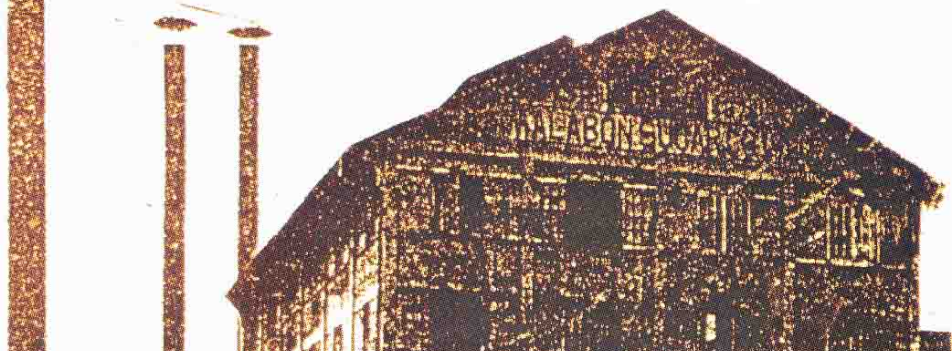
In 1880, the country experienced one of its worst rice shortages due to milling inadequacies. Responding to this acute situation, Smith Bell distributed rice to the southern provinces through the operation of its own fleet of lighters and inter-island steamers. In response to a concurrent sugar shortage crisis, Smith Bell established the Luzon Sugar Company — the first sugar refinery in the islands, located a few miles north of Manila.
While contending with one crisis after another, the company also reached peak performance. During these years, most foreign firms engaged in import-export trade and banking also ventured into shipping, fire and marine insurance, and became agents of international lines and companies. Towards the end of the 19th century, Smith Bell held the agencies of at least four banking institutions, seven insurance firms, and at least six shipping lines, and was the representative of several commercial Spanish inter-island vessels.
Beyond its regular business activities, Smith Bell also distinguished itself through notable projects. Among its most prominent accomplishments was the supervision and construction of the San Sebastian Church — an all-steel infrastructure prefabricated in Belgium and assembled piece by piece.
During the revolution era, Smith Bell also pioneered oil exploration, commencing drilling operations in Cebu in 1896, though the project was eventually abandoned as the oil found was not of commercial quantity.
THE AMERICAN ERA
Coinciding with the extension of free trade between the United States and the Philippines, Smith Bell was incorporated as a domestic liability corporation in 1909. The First World War from 1914 to 1918 brought significant prosperity, as products such as copra, hemp, and sugar were in great demand and the islands imported more manufactured goods.
Around this time, Smith Bell further expanded and diversified. In shipping, the company acted as general manager of Compañia Maritima and represented a number of British steamship companies. Smith Bell also became agent for the Asiatic Petroleum Company, later known as Shell, and acquired Underwood Corporation to venture into business machines and office equipment. Another breakthrough was the formation of Red V Coconut Products, Ltd., which manufactured and exported desiccated coconuts.
All these achievements came to an abrupt halt with the onset of World War II. Smith Bell closed operations as most of its key staff were imprisoned in concentration camps during the Japanese occupation.

PHILIPPINE INDEPENDENCE
After the War, Smith Bell returned to operations and immediately undertook the reconstruction of its warehouses. With the support of banks, the company resumed importing building and construction materials. Core services in insurance, trading, import and export, and shipping were progressively restored. Red V Coconut Products was rehabilitated, and by 1945 the company found itself managing the Domestic Insurance Company of the Philippines.
Smith Bell also diversified into printing through the establishment of Philippine Business Forms, involved in packaging and printing of cartons and labels. It acquired C.M. Lovsted & Co., a firm engaged in the trading of a wide range of industrial products and equipment.
In 1959, legislation restricting domestic retail trade to Filipino citizens and corporations led Smith Bell to become 60% Filipino-owned, marking the gradual transition away from British executive leadership.
In the 1960s, Smith Bell expanded its machinery and industrial products business to capitalize on the growth of diesel engines, and established the first Philippine factory to manufacture machine-woven carpets from local natural fibers.
In insurance, Smith Bell took a controlling interest in Henry Hunter Bayne Adjustment Co., expanding into all types of insurance adjustment work.
In 1969, Smith Bell Travel and Tours was incorporated, pioneering the first international chartered flights from Cebu direct to Hong Kong, Taipei, and Tokyo, and entering a joint venture with the Thomas Cook travel group.
As the 1970s and 1980s came, the company consolidated and divested select investments, focusing on its core areas of expertise.
SMITH BELL TODAY
Backed by nearly 180 years of history — with the formal establishment in 1846 — Smith Bell Corporation continues to build on its enduring tradition of integrity and excellence. Today, the Smith Bell Group operates across multiple industries through five active subsidiaries:
- Lloyd's of London Agency Division — serving as the sole Lloyd's Agent in the Philippines, providing maritime surveys, claims settling, intelligence services, and brand protection across a comprehensive range of cargo and hull disciplines.
- Wilhelmsen-Smith Bell Shipping, Inc. — one of the leading shipping agencies in the Philippines, representing numerous foreign principals and offering vessel husbanding, freight forwarding, customs brokering, and chartering services.
- Smith Bell Insurance Agency, Inc. — providing expert insurance intermediary services across a broad range of life and non-life lines, with over a century of insurance expertise behind it.
- Smith Bell Mini-Hydro Corp. — developing and operating run-of-river hydroelectric power projects in Nueva Vizcaya, contributing to the Philippines' renewable energy goals.
- Smith Bell Loan Resources, Inc. — offering accessible, non-collateralized loan facilities to small and medium enterprises and individuals.
As it faces the daily challenges of an ever-changing world, Smith Bell continues to rely on its unchanging foundation — integrity and excellence — as its core amidst a changing world.
